ASEAN’s agricultural commodity producers stand at a pivotal moment. Commodity prices are increasing amidst higher energy, agricultural input, and shipping costs as a result of the conflict in the Middle East. Even before the crisis in Iran and the Strait of Hormuz, global trade flows were already shifting, affected by geopolitics and Sino-American tensions. Nationalist and protectionist policies are changing how certain commodities are being traded. Sustainability regulations are also shaping trade in commodities. ASEAN agribusinesses are adjusting to these shifts and are increasingly looking to explore new markets beyond the United States, European Union, and even India and China, by trading more within ASEAN and strengthening South-South trade.
At the same time, there ASEAN agribusinesses are working to incorporate sustainability in their business strategies. Sustainability is not just about conserving ecosystems, but also about aligning practices with demands for circularity and emissions reduction, as well as ensuring resilient agricultural systems for food security. Agribusinesses are moving up the value chain by pursuing the conversion of waste to energy via biogas or supplying feedstock for products like biodiesel and sustainable aviation fuel. Through these strategies, ASEAN’s agribusinesses can contribute to the development of a more sustainable and resilient economy.
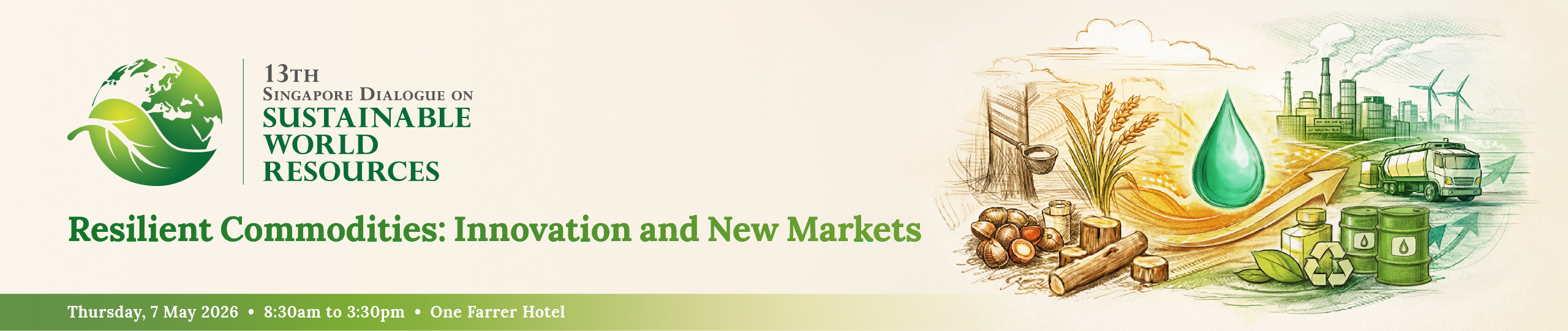
As a hub for business, innovation, and finance, Singapore has an important role in working together with its neighbours in ASEAN and the region’s private sector in navigating these challenges — staying competitive in global markets while advancing sustainable and resilient outcomes at home. The 13th Singapore Dialogue on Sustainable World Resources (SWR) will bring together policymakers, business leaders, and experts to discuss the challenges facing the region’s commodities industries, while exploring opportunities for sustainable business and investment.